
Introduction: A Busy Aisle, A Quiet Problem
The claim is simple: most warehouse delays are not about people—they’re about coordination. Robotics software sits in the middle of that dance, timing every move. With warehouse automation software, the floor becomes a system, not a series of silos. Picture a rush hour: carts jam at a packing station, conveyors throttle back, an AGV hesitates near Zone C. Data says 8–15% of time is lost to micro-stops and handoffs. Why still? Because the old control stack was never built for live orchestration at scale (oui, it shows). What if our tools thought in flows, not modules? And could adapt in seconds, not days. Let’s step into that gap—and see how to close it—before the next shift rolls in.

The Hidden Flaws Beneath “Working” Warehouses
Where do legacy systems fail?
Technical first. Traditional WMS and WES were tuned for static rules and nightly batching. They handle orders; they do not truly “orchestrate.” A PLC will keep a conveyor moving, yes, but it does not reason about fleet traffic or task contention. When AMR routes, picking waves, and dock priorities collide, old layers rely on rigid queueing logic. That logic breaks under variability. Look, it’s simpler than you think: throughput dies where decisions are slow. Edge computing nodes help only if the brain can re-plan, now. Without real-time task allocation, you get downstream congestion, backflow to pack, and empty miles. And the worst part—no one sees the loss until KPIs sink at week’s end.
Integration is the second crack. Interfaces were built as point-to-point pipes. Every change means a new map, a new patch. Add a robot brand or a sorter extension? You fight custom adapters, incompatible ROS 2 message types, strange API throttles—funny how that works, right? Meanwhile, sensors like LiDAR scream data that no one normalizes. The result: misaligned SLAs, idle AMR fleet segments, and human workarounds to chase exceptions. The system “runs,” but productivity drifts. Micro-stops pile up. And yes, power converters hum on, even while your capacity sits silent.
From Rigid Rules to Living Systems
What’s Next
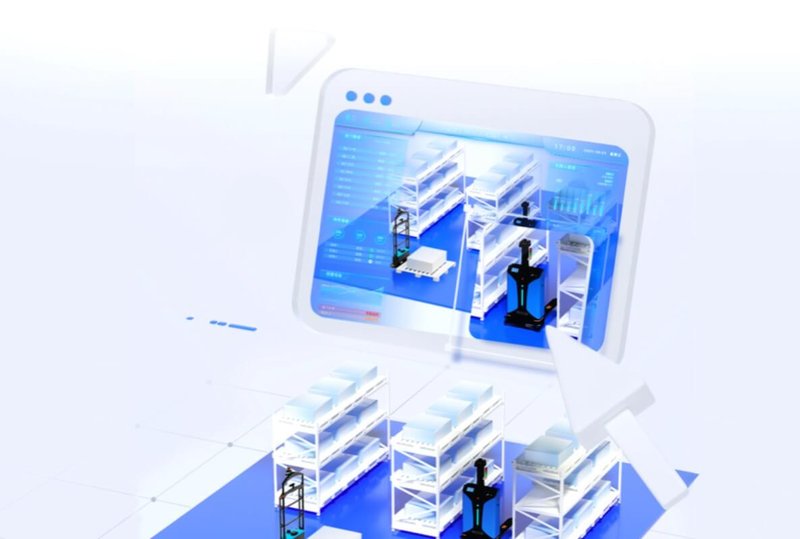
Forward-looking means principles, not hype. The new baseline treats the warehouse as a live network. Warehouse automation software applies model-based orchestration: it listens to every node, predicts contention, then rebalances work. Think demand shaping, not wave batching; think constraint solving, not fixed priorities. Digital twins simulate slotting and travel in minutes, then push better routes to the AMR fleet. A middleware layer unifies ROS 2 topics, WMS orders, and PLC signals into one control surface—so the system speaks one language, not ten. Short sentences matter here because the loop is short: sense, decide, act. Repeat. When the dock gets a spike, packing slows, and AGVs reroute—automatically—before a human even raises a hand.
Comparative view, briefly. Old stacks wait for the plan to finish. New stacks plan while you move. That is the pivot. Granular metrics—queue time at merge points, battery windows, human pick density—become live inputs, not end-of-day reports. The effect is felt fast: fewer deadlocks, smoother handoffs, healthier batteries, safer aisles. And yes, costs stabilize because changes shift from code edits to policy toggles. If you measure three things to choose well, make them clear: 1) decision latency under load (in seconds, not minutes); 2) open integration for robots, PLCs, and WMS without fragile glue; 3) measurable flow gains at the merge—dock-to-pack cycle time, not just lines per hour. Keep those tight, and the floor breathes. Advice, not a pitch—then act. You will thank your night shift, and they will sleep better. Learn more with SEER Robotics.