
Online games are often seen as entertainment, but many of them also require players to think carefully, make decisions, recognize patterns, and solve challenges. A game such as T999 Game can encourage players to use several mental skills while they play. Depending on the type of game, online gaming may provide opportunities to practice logical thinking, planning, memory, concentration, and decision-making.
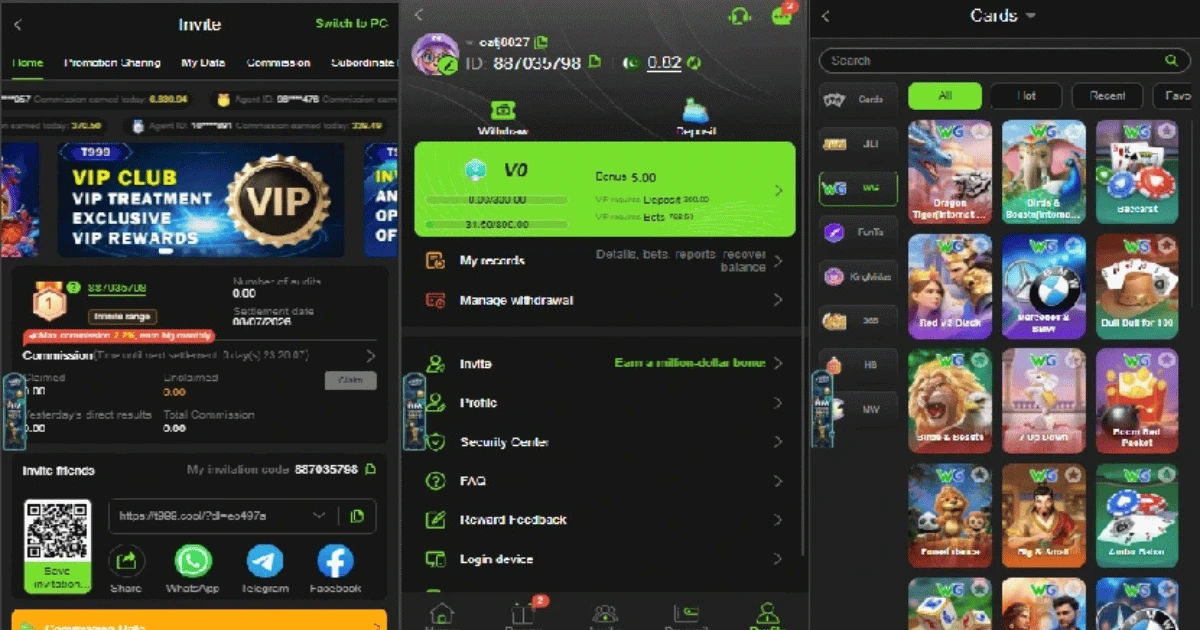
The important question is whether these skills can actually improve problem-solving ability outside the game. The answer is not simply yes or no. Some games can support problem-solving development when they require meaningful decisions and active thinking. However, the benefits depend on the game's design, the way it is played, and how much time a person spends gaming.
What Is Problem Solving?
Problem solving is the ability to understand a challenge, identify possible solutions, choose an appropriate approach, and evaluate the result. It is a skill people use in school, work, relationships, and everyday life.
For example, a student solving a difficult mathematics question must understand the problem before deciding which formula or method to use. Similarly, someone planning a trip may need to compare routes, costs, schedules, and unexpected difficulties.
Problem solving involves several smaller abilities. These include logical reasoning, critical thinking, creativity, attention, memory, flexibility, and decision-making.
Online games can involve many of these same processes. Players may need to react to changing situations, predict what could happen next, and adjust their strategy when their first attempt fails.
How Online Games Encourage Problem Solving
Games are interactive by nature. Instead of simply reading information, players have to respond to situations and make choices.
A player might receive a challenge with several possible solutions. Choosing the right solution requires observation and judgment. If the decision fails, the player can often try again and learn from the outcome.
Players Learn Through Trial and Error
Trial and error is one of the most common forms of learning in games. A player makes a decision, observes the result, and changes the approach if necessary.
This process can teach an important problem-solving lesson: failure does not always mean the task is impossible. It may simply mean that a different strategy is needed.
In a game such as T999 Game, a player may encounter situations that require repeated decisions. By comparing successful and unsuccessful choices, the player can gradually understand which approaches are more effective.
This experience can encourage flexible thinking. Instead of becoming stuck after one unsuccessful attempt, players may become more comfortable experimenting with alternatives.
Games Require Quick Decision Making
Many online games require decisions within a limited amount of time. Players may have to decide whether to continue, change a strategy, avoid a risk, or choose another option.
This can develop decision-making habits because players must consider available information before acting.
A player using T999 Game may pay attention to patterns, timing, and possible outcomes before making a choice. The exact skills involved depend on the game's mechanics, but the general process can involve observation followed by action.
However, fast decision-making is not automatically the same as good decision-making. Strong problem solving requires both speed and accuracy. Players should learn to consider consequences rather than making random choices.
Pattern Recognition and Logical Thinking
Pattern recognition is an important part of problem solving. People use patterns to understand information and predict what may happen next.
Many games contain repeated structures. Players may notice sequences, behaviors, layouts, or changing conditions. Recognizing these patterns can help them make better decisions.
A game such as T999 Game may encourage players to observe what is happening instead of making completely random choices. The player can compare previous situations with current ones and decide whether a familiar pattern is relevant.
Logical thinking works in a similar way. Players must connect information and determine what conclusion makes sense.
For example, if one strategy repeatedly produces poor results while another produces better outcomes, a logical player will reconsider the weaker strategy.
Strategic Thinking and Planning
Some games require players to think several steps ahead. Instead of focusing only on the current move, players must consider possible future situations.
Strategic thinking can include setting goals, evaluating resources, predicting consequences, and changing plans when circumstances change.
T999 Game can be approached as an opportunity to practice strategic thinking when gameplay involves choices, patterns, or changing conditions. Players can learn to ask questions such as:
-
What is my current objective?
-
What information do I have?
-
What choices are available?
-
What could happen after each choice?
-
What should I do if my first strategy does not work?
These questions are useful beyond gaming. Students can apply similar thinking when completing assignments, preparing for examinations, or working on projects.
Memory and Attention
Problem solving often depends on remembering important information. A person may need to remember instructions, previous mistakes, patterns, or successful strategies.
Games can provide repeated opportunities to use working memory. Players may need to keep several pieces of information in mind while responding to a challenge.
Attention is also important. If a player misses a critical detail, the quality of the decision may decrease.
Playing T999 Game may require a player to stay focused on the information presented during gameplay. This can make attention part of the overall gaming experience.
Still, it is important to remember that better attention during a game does not automatically mean a person will have better attention in every area of life. Transfer depends on the type of task and the skills being practiced.
Creativity and Alternative Solutions
Not every problem has only one solution. Sometimes the best answer requires creativity.
Certain online games allow players to experiment with different strategies. When players are encouraged to find their own methods, they may become more willing to consider alternatives.
A player might discover that the obvious approach is not the most effective one. Instead of repeating the same action, they can try something different.
T999 Game can encourage this kind of exploration when its gameplay allows meaningful choices and different approaches to a challenge.
Creative problem solving is valuable for students because academic and real-world problems are not always solved by memorizing a single answer. Students often need to combine knowledge in new ways.
Learning From Mistakes
One of the strongest potential benefits of games is immediate feedback. Players usually know when a decision worked and when it did not.
This feedback allows them to adjust their behavior.
For example, after an unsuccessful attempt in T999 Game, a player may think about what caused the poor result. Was the decision made too quickly? Was important information ignored? Was the chosen strategy inappropriate?
This reflection is more useful than simply repeating the same action.
The same principle applies to education. A student who gets a mathematics question wrong can examine the mistake, understand the cause, and try a better method.
Can Gaming Skills Transfer to Real Life?
This is one of the most important questions.
Playing games can involve genuine cognitive activity, but that does not mean every gaming skill automatically transfers to real-life problem solving.
Transfer is more likely when the game and real-world task use similar mental processes.
For example, a strategy game may provide practice with planning, resource management, and decision-making. Those skills could be useful in certain academic or professional situations.
However, repeatedly performing a narrow gaming action does not necessarily improve unrelated abilities.
This means T999 Game should not be considered a replacement for education, reading, practical experience, or real-world problem solving. Instead, gaming can be one activity among many that encourage mental engagement.
The Importance of How You Play
The benefits of gaming depend partly on how a person approaches the game.
Passive or repetitive play may provide less opportunity for meaningful problem solving. Active play is different because the player thinks about decisions, evaluates results, and learns from mistakes.
When playing T999 Game, a person can make the experience more thoughtful by paying attention to patterns and outcomes rather than simply acting without consideration.
After a difficult challenge, players can ask themselves what they learned. This turns gameplay into a more reflective activity.
Does More Gaming Mean Better Problem Solving?
Not necessarily.
Spending more hours playing does not automatically produce greater cognitive benefits. Excessive gaming can interfere with sleep, exercise, education, social interaction, and other important activities.
Balance is therefore essential.
A student should not replace studying with gaming simply because a particular game involves thinking. Schoolwork develops specific knowledge and academic skills that games cannot fully provide.
Similarly, real-world communication and teamwork require experiences that cannot always be reproduced inside a game.
T999 Game can be part of a balanced routine, but it should not dominate a person's daily schedule.
Online Games and Critical Thinking
Critical thinking involves examining information before accepting a conclusion. It requires people to question assumptions, compare evidence, and consider alternatives.
Games can sometimes encourage these habits.
When a player faces a challenge, they may need to determine which information matters and which information can be ignored. They may also need to decide whether an apparent opportunity is actually beneficial.
In T999 Game, thoughtful players can focus on evaluating available information rather than relying entirely on impulse.
This distinction is important. Good problem solving is not about making the fastest possible decision. It is about making a reasonable decision based on the information available.
Social Problem Solving in Multiplayer Games
Some online games involve interaction with other players. These situations can introduce another form of problem solving: social problem solving.
Players may need to communicate, coordinate actions, divide responsibilities, and respond to unexpected behavior.
Team-based environments can encourage cooperation and negotiation.
A player may discover that individual skill is not enough to achieve a shared goal. Communication becomes part of the solution.
Although T999 Game and similar online experiences vary in their social features, multiplayer gameplay can provide opportunities to practice coordination and communication.
These skills can also matter in classrooms and workplaces, where people often have to solve problems together.
Possible Limitations of Online Gaming
It is important to maintain a balanced view.
Not every online game improves problem-solving ability. Some games focus mainly on repetition, reaction speed, or chance. Others may offer limited opportunities for strategic thinking.
There is also the possibility of distraction. If gaming becomes excessive, it may reduce time available for homework, reading, sleep, physical activity, and face-to-face interaction.
T999 Game should therefore be viewed as entertainment first unless its specific design clearly provides meaningful learning activities.
Players should also avoid assuming that success in a game proves that they have mastered real-world problem solving. Real-life challenges often involve incomplete information, emotional factors, long-term consequences, and responsibilities that games may not reproduce.
How Students Can Use Games Productively
Students can make gaming more beneficial by approaching it intentionally.
First, choose games that require planning, reasoning, strategy, or puzzles rather than relying entirely on repetitive actions.
Second, pay attention to decision-making. Think about why a particular choice worked or failed.
Third, connect gaming lessons to real situations. If a game teaches planning, consider how the same planning process could help with a school project.
Fourth, maintain a healthy schedule. Gaming should fit around essential responsibilities rather than replace them.
Finally, reflect after challenging situations. Asking what went wrong and what could be changed is one of the most useful problem-solving habits a person can develop.
Tips for Developing Better Problem-Solving Skills
Online games can support problem solving, but people should also practice these skills away from screens.
Reading puzzles, learning mathematics, solving logic problems, playing board games, writing, conducting experiments, and working on projects can all encourage structured thinking.
When facing a difficult problem, use a simple process.
Understand the Problem
Before searching for an answer, identify exactly what needs to be solved.
Break It Into Smaller Parts
Large problems often become easier when divided into smaller tasks.
Consider Multiple Solutions
Do not automatically choose the first idea. Think about alternatives and compare their possible results.
Test Your Approach
Try the solution and observe what happens.
Learn From the Result
If the solution fails, identify why. Then modify the approach and try again.
This process works in school, work, games, and everyday situations.
What Parents and Teachers Should Know
Parents and teachers do not necessarily need to treat all gaming as harmful or all gaming as educational.
Instead, they can focus on the quality, purpose, and amount of gaming.
If a game encourages reasoning, planning, and experimentation, adults can discuss these skills with students. Asking a child why they chose a particular strategy can turn gameplay into an opportunity for reflection.
For example, discussing a player's decisions in T999 Game may help them recognize the difference between random actions and evidence-based choices.
At the same time, adults should encourage balance and make sure gaming does not interfere with important responsibilities.
The Role of Balance
The most realistic approach is to see online games as one possible tool for mental engagement rather than a complete learning solution.
A game can provide repeated challenges, immediate feedback, and opportunities to experiment. These features may help players practice certain forms of thinking.
However, strong problem-solving ability develops through many experiences.
Students need to read, write, communicate, study, experiment, make decisions, and handle real responsibilities.
T999 Game can complement these activities when used responsibly, but it should not replace them.
Conclusion
So, can an online game improve problem solving? Yes, it can potentially support certain problem-solving skills, but the effect depends on the game's design and the player's approach.
Games can encourage logical thinking, pattern recognition, planning, memory, attention, decision-making, creativity, and learning from mistakes. These are valuable components of effective problem solving.
T999 Game can provide an interactive environment where players make choices, observe outcomes, and adjust their strategies. When players think carefully about their decisions rather than acting randomly, the experience may provide useful practice in analyzing situations and considering alternatives.
However, gaming alone is not enough to develop strong real-world problem-solving ability. The strongest results are likely to come from combining thoughtful gaming with education, reading, practical activities, teamwork, and real-life challenges.
The key is balance and intention. Instead of asking whether every online game is educational, it is more useful to ask what mental skills a particular game requires and how those skills are practiced.
T999 Game may be enjoyable entertainment, but when approached thoughtfully, games with decision-making and strategic elements can also give players opportunities to practice useful cognitive habits.
Ultimately, good problem solving comes from learning how to understand challenges, evaluate information, test solutions, learn from mistakes, and adapt. Online games can provide a small but potentially valuable environment for practicing these habits, especially when gaming is balanced with meaningful activities in the real world.