Author: quadro_bike

Thrills And Frills A Journey In To The Playing Field Of Casinos

When it comes to the saturated world of amusement and luxury, a gambling casino certainly tops the list. These spirited realms of leisure time are not merely about gambling, they are about a one thousand undergo that transcends the terrestrial. Intricate in plan, pulsating with spirited music and buzzing with non-stop process, casinos anticipat an epinephrin rush that’s hard to resist.

Golden chandeliers, lavish carpets, thou architecture, it feels like stepping into a different era. The alluring atm is enough to make one’s heart race. But it’s not just the aesthetic appeal that draws people in. slot online gacor offer various games, from traditional ones like stove poker, blackjack, roulette to coeval slot machines, each studied to take exception and think about in match measure.

An essential part of the casino go through is the spectacle of it all. Drapes of rich colors, staff treated impeccably, resonant cheers, and echoes of slot machines. It’s a sensorial surcharge, but one that excites and invigorates players. Add to this, the historied shows, high-profile concerts, live performances, and no one can deny the enthralling aura that a casino emanates.

One cannot speak of casinos without mentioning their role in enculturation. People from various walks of life converge at these floater. Whether you’re a veteran veteran who can reckon card game in their sleep in, a novitiate just dipping their toes, or someone who’s just there for the cocktails and the ambience, there’s a aim for everyone. The chumminess that develops around the tables creates a sense of community among players.

A casino’s epicure food and beverages are another leading light draw. Exclusive restaurants and bars suffice everything from delicious thumb food to 5-course meals prepared by noted chefs. This preparation view joint with signature cocktails volunteer a gastro-delight, qualification casinos a go-to terminus for food connoisseurs as well.

However, despite the nobleness, it’s profound to empathise the of recreation in a casino. It’s advisable to risk responsibly, holding it leisurely and pleasant. Stick to a budget and don’t let the stimulating atm make you forgetful about the wager mired. Remember, a gambling casino is primarily about amusement, and any commercial enterprise gains should be a secondary bonus.

In ending, the casino earthly concern is a wonder to be savored. It’s an emporium of excitement, luxuriousness, entertainment, gastronome food and drinks, socialization, and above all, an red-letter experience. Whether it’s the hitting visuals, the seductive games or the elegant gastronomy, a gambling casino is an enchanting world that guarantees a stimulating lark. Enjoy the ride, for a travel into this livelyscape is all about the undergo itself.

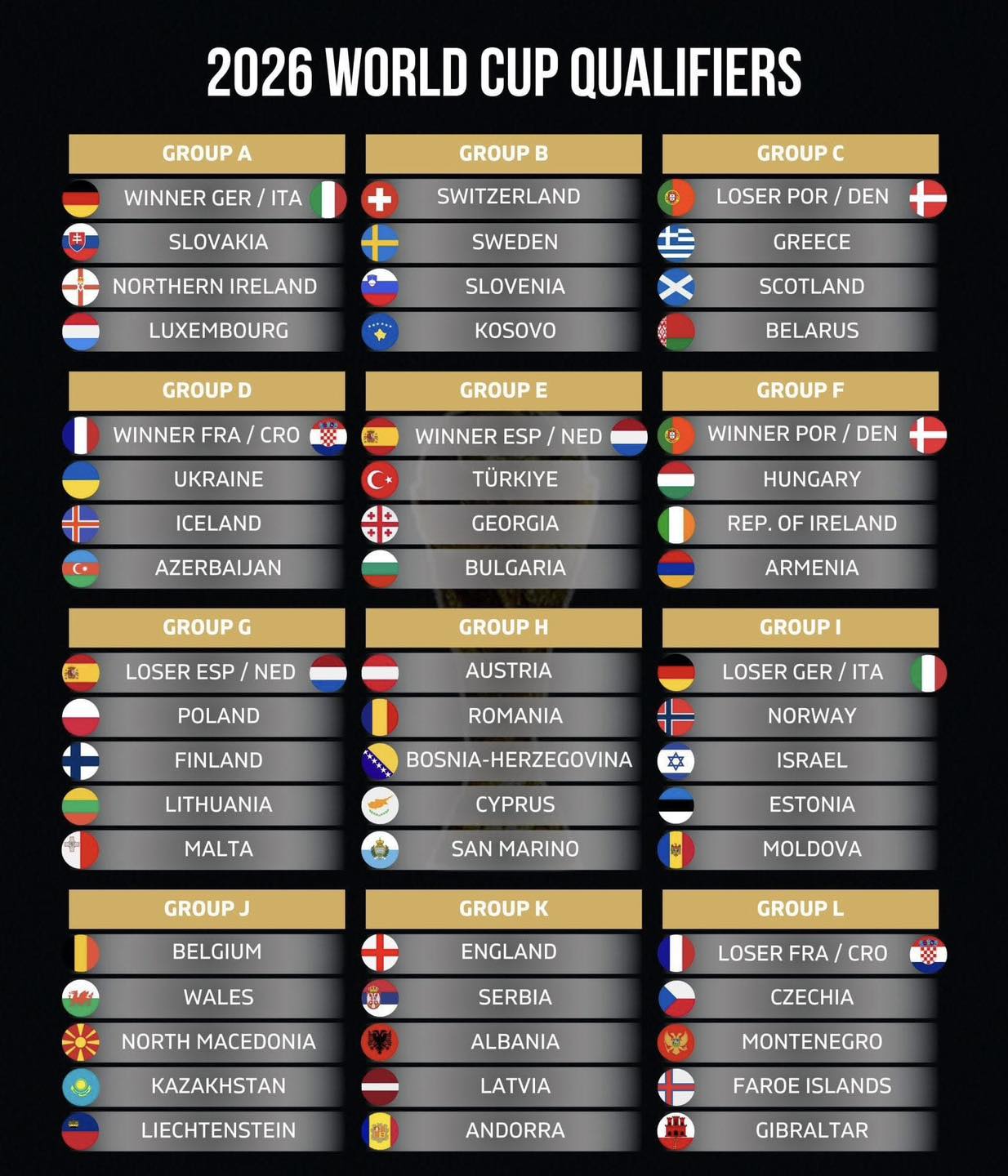
World Cup 2026 Standings and the Penalty System

Penalties in the World Cup serve two completely different purposes depending on the phase of the tournament. In the group stage, there are no penalties — group matches end at 90 minutes. In the knockout stage, penalties decide tied matches after extra time. The all 12 groups covered here page covers only group-stage data where the no-penalty rule applies throughout.

This distinction matters because fans familiar with domestic cup competitions — where group-stage matches can also go to penalties in some formats — sometimes expect the World Cup group stage to use the same rules. The World Cup group stage specifically excludes extra time and penalties to maintain the integrity of the points system.

Why Penalties Would Distort Group Standings

If group-stage draws led to penalty shootouts with three points for the winner and zero for the loser, teams would strategically change their behavior in drawn matches. Some teams might deliberately let a draw go to penalties rather than risk chasing a winning goal and conceding a goal on the counter-attack.

The current system — one point each for every draw, no penalties — rewards teams that take risks to win matches with three points while penalizing teams that settle for draws with only one point. This incentive structure produces more attacking football than a penalty-resolution system would.

The Penalty Shootout as a Separate Tournament Element

Penalty shootouts appear from the Round of 32 onward in 2026. At that stage, the standings table no longer applies — the knockout bracket shows only win or loss for each team. Penalty shootout results appear in the bracket as wins but are treated identically to wins in extra time or regular time for advancement purposes.

How to Use the Standings Page Throughout the Tournament

The standings page at WorldCupPass updates in real time during and after matches. Check it after every group-stage result to see how each group’s table has shifted. The page displays all 12 groups on one screen so you can compare advancement races across the tournament simultaneously. Color coding shows which positions are currently safe for advancement and which are in the qualification zone.

Following the standings page daily through the group stage builds a thorough picture of tournament momentum. Teams that are accumulating points efficiently and building positive goal difference are in the strongest position for the Round of 32. Teams that are scraping through on draws and narrow margins are potentially vulnerable to tiebreaker outcomes on the final matchday. The standings page gives you the data to make those assessments in real time.

Understanding the separation between group-stage standings rules and knockout-round penalty rules helps fans follow the tournament correctly regardless of which phase they are watching.

Partnership Models That Help Organizations Deliver Real Impact

Meaningful social and organizational impact rarely comes from isolated efforts. It emerges when different entities combine strengths, resources, and expertise through well-structured partnerships. Modern organizations increasingly rely on collaboration models to scale their reach and solve complex community challenges more effectively.

Effective partnerships are not just about cooperation—they are about alignment, accountability, and shared value creation. Zeal Inc reflects how structured collaboration frameworks can transform limited resources into scalable impact when applied with clarity and long-term commitment.

Understanding the Role of Partnership in Impact Creation

Partnerships serve as a bridge between vision and execution. Many organizations have strong ideas but lack the capacity, funding, or reach to implement them alone. Through collaboration, these gaps can be filled efficiently.

A well-designed partnership model allows organizations to combine strengths rather than duplicate efforts. One partner may bring financial support, another may contribute technical expertise, while another offers community access and trust.

This shared structure improves efficiency and ensures that initiatives are not only launched but sustained over time. Impact becomes deeper and more widespread when organizations operate as interconnected ecosystems instead of isolated units.

Strategic Alliances for Shared Goals

Strategic alliances are one of the most common partnership models used by organizations focused on long-term impact. These alliances are built around shared objectives such as education reform, healthcare access, environmental sustainability, or economic empowerment.

Unlike short-term collaborations, strategic alliances involve long-term planning and mutual accountability. Each partner commits resources and aligns efforts toward clearly defined outcomes.

These partnerships are particularly effective when addressing large-scale issues that cannot be solved by a single organization. By pooling expertise and influence, partners can achieve results that would otherwise be impossible individually.

Public-Private Collaboration Models

Public-private partnerships (PPPs) bring together government institutions and private organizations to address community needs. This model is especially effective in infrastructure development, education systems, healthcare delivery, and urban planning.

Governments provide regulatory support, legitimacy, and access to public resources, while private organizations contribute innovation, efficiency, and investment.

When properly structured, these partnerships ensure that public needs are met with private-sector efficiency. However, success depends on transparency, clear governance structures, and well-defined responsibilities.

Poorly managed PPPs can lead to inefficiencies, but strong frameworks ensure accountability and measurable outcomes.

Nonprofit and Corporate Partnerships

Nonprofit and corporate collaborations have become increasingly important in modern impact strategies. Nonprofits bring deep community understanding and social mission alignment, while corporations contribute funding, scalability, and operational systems.

This partnership model is often used in education programs, skill development initiatives, and community welfare projects. Corporations benefit through corporate social responsibility (CSR) fulfillment, brand reputation enhancement, and employee engagement opportunities.

Nonprofits, on the other hand, gain access to resources and broader platforms for outreach. When both sides remain aligned on mission and transparency, these partnerships can produce long-lasting community benefits.

Community-Based Collaboration Models

Community-based partnerships focus on engaging local stakeholders directly in planning and execution. These models prioritize inclusion and ensure that solutions are designed with, not just for, communities.

Local leaders, volunteers, schools, and grassroots organizations all play a role in shaping initiatives. This approach builds trust and increases program effectiveness because solutions are tailored to real needs.

Community participation also strengthens ownership. When individuals are involved in decision-making, they are more likely to support and sustain initiatives over time.

These partnerships are particularly effective in rural development, public health awareness, and local education programs.

Academic and Research Partnerships

Universities and research institutions play a crucial role in evidence-based impact creation. Partnerships between organizations and academic institutions help ensure that programs are guided by data, research, and innovation.

These collaborations support program evaluation, impact measurement, and policy development. They also encourage experimentation and the testing of new solutions in controlled environments.

Organizations benefit from access to expert knowledge, while academic institutions gain real-world data for research purposes. This mutual exchange strengthens both theory and practice.

Cross-Sector Innovation Partnerships

Cross-sector partnerships bring together organizations from different industries to solve complex challenges. These collaborations often include nonprofits, private companies, governments, and technology providers working together.

Such partnerships are especially valuable in areas like climate change, digital transformation, and public health crises. Each sector contributes unique strengths, leading to innovative and scalable solutions.

For example, a technology company may provide digital infrastructure, while a nonprofit ensures community engagement, and a government body facilitates policy support. This combination creates a powerful ecosystem for change.

Building Trust as the Foundation of Partnerships

No partnership can succeed without trust. Trust ensures transparency, reduces conflict, and strengthens long-term cooperation. Organizations must invest time in building relationships before focusing on outcomes.

Clear communication, defined roles, and shared accountability are essential components of trust-building. Regular reporting and open dialogue help maintain alignment between partners.

Trust also grows when organizations consistently deliver on commitments. Over time, this reliability strengthens partnerships and increases their effectiveness.

Measuring Partnership Impact

To ensure effectiveness, partnerships must include systems for measuring outcomes. Clear metrics help evaluate whether goals are being achieved and resources are being used efficiently.

These metrics may include social impact indicators, financial performance, community engagement levels, or service delivery improvements.

Regular evaluation allows organizations to adjust strategies, improve collaboration models, and scale successful initiatives.

Without measurement, partnerships risk becoming symbolic rather than impactful.

The Future of Collaborative Impact

As global challenges become more complex, the importance of partnership models continues to grow. No single organization can address issues like inequality, climate change, or education gaps alone.

Future-focused organizations will increasingly rely on hybrid partnership models that combine public, private, academic, and community strengths. Digital tools and data-driven systems will further enhance coordination and transparency.

The evolution of partnerships is not just about efficiency—it is about creating deeper, more sustainable impact across societies.

Conclusion

Partnership models are essential for organizations that aim to deliver real and lasting change. When collaboration is structured, transparent, and purpose-driven, it multiplies impact far beyond what any single entity can achieve.

Through strategic alliances, cross-sector cooperation, and community engagement, organizations can build systems that not only solve problems but also strengthen societies for the future.

Strengthening International Relationships Through Hockey and Sportsmanship

Global sport has a unique ability to connect people who would otherwise never share the same space. Among these sports, hockey stands out for its intensity, structure, and strong culture of respect. International competitions create environments where nations compete fiercely on the ice while building understanding off it. This balance between rivalry and respect helps form relationships that extend far beyond the rink.

When teams travel abroad, they carry not only athletic skill but also cultural identity. These interactions allow athletes and fans to experience different traditions, communication styles, and values in real time. Over time, these exchanges contribute to stronger international relationships built on mutual appreciation rather than distance.

Building Cultural Understanding Through Competitive Hockey

International hockey tournaments create a setting where cultural differences become visible in a positive and constructive way. Players from different countries bring unique styles of play shaped by their national training systems and sporting philosophies. Observing and adapting to these differences encourages learning and respect among competitors.

Off the ice, athletes often interact through shared meals, training sessions, and informal conversations. These moments allow them to understand how others live, think, and approach the game. Such experiences reduce stereotypes and build genuine connections between individuals from different backgrounds.

Within sports leadership discussions, examples like Brent Polischuk Victoria are sometimes referenced in broader conversations about how individuals connected to sports environments can influence collaboration and relationship-building between international communities. This highlights how leadership and participation in sport can extend beyond performance into meaningful global interaction.

International Competitions as Informal Diplomacy Platforms

Major hockey events often function as informal diplomatic spaces where countries interact outside political or economic frameworks. While governments may engage through official channels, athletes represent their nations in a more personal and emotionally engaging way. This human element often creates stronger impressions than formal negotiations.

During tournaments, players and coaching staff frequently engage in respectful exchanges that reflect sportsmanship and mutual recognition. Handshakes after matches, shared respect for fair play, and acknowledgment of skill contribute to a positive atmosphere even in highly competitive settings.

These interactions often continue beyond the tournament itself. Athletes maintain friendships, exchange training ideas, and sometimes collaborate in professional leagues abroad. Such ongoing relationships gradually strengthen ties between countries at a grassroots level.

Sportsmanship as a Foundation for Global Respect

Sportsmanship plays a central role in shaping how international hockey relationships develop. Respect for rules, opponents, and referees ensures that competition remains fair and constructive. This shared commitment to integrity creates trust between teams, even in high-pressure environments.

When players demonstrate discipline and respect, they set a standard that influences younger athletes and fans worldwide. This behavior reinforces the idea that competition does not require hostility and that excellence can be achieved through fairness and cooperation.

Sportsmanship also helps manage cultural differences during games. Even when misunderstandings occur, the shared language of respect ensures that conflicts are resolved quickly and professionally. This stability is essential for maintaining positive international relations through sport.

The Role of Players as Global Ambassadors

Athletes competing internationally often become unofficial ambassadors for their countries. Their behavior on and off the ice reflects national values and influences how others perceive their homeland. This responsibility encourages professionalism and cultural awareness.

Interactions between players from different nations often extend beyond competition. Many athletes share training techniques, recovery methods, and tactical insights. These exchanges contribute to the overall development of the sport while strengthening interpersonal bonds.

In many cases, friendships formed during international tournaments last for years. Players reconnect in professional leagues, coaching roles, or community events, continuing to build bridges between their countries long after their playing careers evolve.

Shared Experiences That Build Lasting Connections

The emotional intensity of hockey creates shared experiences that are difficult to replicate in other environments. The pressure of competition, the excitement of victory, and the disappointment of defeat are felt collectively by teams and fans alike.

These shared moments often become the foundation for long-term relationships. Teams that compete against each other regularly begin to develop mutual respect and familiarity. Over time, rivalry transforms into recognition of shared dedication to the sport.

Off the ice, cultural exchange programs, international training camps, and youth tournaments further strengthen these bonds. Young athletes especially benefit from early exposure to global perspectives, helping them grow into more open-minded and adaptable individuals.

Hockey’s Contribution to Global Unity and Cooperation

The influence of hockey on international relationships extends beyond the sport itself. It encourages dialogue, reduces cultural distance, and fosters cooperation between nations at multiple levels. From grassroots programs to elite competitions, the sport creates opportunities for connection that might not exist otherwise.

Communities that engage in international hockey exchanges often report stronger cultural awareness and increased interest in global collaboration. These outcomes demonstrate how sport can contribute to broader social and diplomatic goals.

While competition remains at the heart of the game, the relationships built through hockey often prove more enduring than the results on the scoreboard. Through shared respect, cultural exchange, and sportsmanship, hockey continues to play a meaningful role in strengthening international relationships and promoting unity across borders.

Excites And Approaches This Exhilarating Whole World Of On-line Casinos

Imagine a world full of resonance, vocalize, get off and prevision- a world where fortunes are made and lost in the blink of an eye. Welcome to the dynamic universe of discourse of casinos. No yearner just the exciting save of James Bond-esque figures dressed in tuxedos or graceful gowns, casinos now to populate from all walks of life, offering them seductive games, associated risks, and potency rewards.

In pop perception, a casino is a hub of excitement and fun where one can toy with Lady Luck amidst tables of blackjack, salamander, roulettes, slot machines, and more. However, the essence of a gambling casino extends beyond mere amusement. It is a weapons platform for plan of action engagements studied to test the mind’s mental dexterity against the uncertainties of .

The prospects of winning often coax players to hold on the nuances of strategical games like poker. Success at the fire hook defer relies to a great extent on understanding opposition conduct, calculating odds, and making enlightened decisions supported on an ever-changing set of circumstances. The vibrate, the take exception, and the potential payout make it a mesmerising game for many.

On the other hand, slots typify the democratization of casino gambling. A slot machine does not discriminate based on your gambling skills. It only demands a modest stimulus, a spin, and lady luck. The ease of play and potentiality for hefty payouts have made slots a staple fibre on the gambling casino take aback, attracting a fanlike spectrum of players.

Beyond games, what truly sets situs kokitoto apart are their unusual atmospheres. Glamorous and often princely, casinos are designed to figure an visualize of possible wealthiness that can be attained at the tables. The ever-present jingle-jangle of coins, the expansive cheers of the winners, the tense up still that often precursors the flip of a card; these make an exciting see that goes beyond mere gambling.

In the age of the net, online casinos have taken the play worldly concern by surprise. They volunteer the vibrate of a real-time casino while granting players the convenience of humoring their gambling rage from the solace of their homes. Online casinos have also spread the play options beyond traditional gambling casino games to let in virtual sports and fantasise leagues.

In closing, the invoke of casinos lies in more than just the potential of financial win. They offer a unique immingle of tickle, strategy, and entertainment embedded in a vivacious atm that promises an fly the coop from the humdrum of the quotidian. Whether you are a poker prodigy or a initiate at the slots, the gambling casino welcomes you to a worldly concern where fortune favours the brave, and every game played is a adventure Charles Frederick Worth taking.