Author: SaeedKhatri

What Causes Hydraulic Motor Leakage and How to Prevent It

Leakages of hydraulic motors occur in most industrial and mobile machines. Any leakage may reduce pressure in the system, decrease efficiency, and result in unnecessary and costly downtime. This is particularly true when it remains unfixed for a long time. Leaks are typically a result of using old parts, improper motor usage, and inadequate maintenance.

What Causes Hydraulic Motor Leakage and How to Prevent It? 1
Being aware of the causes of leaks in hydraulic motors can prevent them before it is too late. This guide will clarify the key causes of hydraulic motor leakage, how to identify the warning signs, and some easy measures that you can take to prevent leakage and ensure that your motor lasts longer.

Is Some hydraulic motor manufacturer Motor Leakage Normal?

Hydraulic motor leakage happens when hydraulic fluid leaks out from spots where it should stay sealed. This can happen inside the motor or outside around seals, fittings, and connections.

A tiny bit of internal leakage is normal in most hydraulic motors. This small flow actually helps lubricate the moving parts and reduce friction. However, visible leaks on the outside are not normal. If you see oil dripping or pooling around the motor, it usually means seals are worn out, fittings are loose, or there is damage.

Any external leaks should be taken seriously as a sign that the motor needs maintenance or repair.

Leaks lower the pressure and make the motor work less efficiently. Over time, leaks can cause the motor to overheat, get dirty, and damage nearby parts. Even small drips might seem harmless, but if fluid keeps leaking, it usually means there’s a bigger problem that needs fixing.

What Causes Hydraulic Motor Leaks?

Hydraulic motor leaks usually happen because of worn parts, system problems, or how the motor is used. Finding the real cause helps stop leaks from coming back.

Why Do Worn Seals Cause Leaks?

Seals keep the hydraulic fluid inside the motor. Over time, heat, pressure, and friction wear out the seals. When seals get hard or cracked, they can't hold the fluid anymore. Then oil starts leaking around the shafts or openings, especially when the motor is running.

Can High Pressure Cause Leaks?

Too much pressure puts extra stress on seals and parts inside the motor. If the pressure goes beyond what the motor is made for, seals can get bent or break. High pressure also makes leaks inside the motor worse. It heats things and wears seals out faster.

How Does Dirty Hydraulic Fluid Cause Leaks?

Dirty fluid has tiny particles that damage the inside of the motor. This wears down seals, pistons, and valves. When parts wear out, fluid can slip past seals more easily. Water in the fluid can also weaken seals and cause rust inside the motor.

Do Loose Fittings and Connections Cause Leaks?

Loose or badly tightened fittings often cause leaks outside the motor. Vibration from running can make fittings come loose over time. Bad installation or worn threads let fluid escape. This is especially where hoses connect.

Can Too Much Heat Cause Leaks?

High heat affects the seals and the fluid. Heat can make seals hard or shrink, so they don’t seal well anymore. Hot fluid also becomes thinner so that it becomes easier to leak through small holes and damaged sections.

How Does Improper Installation Cause Hydraulic Motor Leakage?

Wrongly installed components cause stress. Seals have uneven loads when there is a misaligned shaft. Fittings that are over-tightened may break threads or seals.

It is commonly the case that improper torque settings will result in premature leakage. Adhering to installation guidelines is one of the ways to avoid these unnecessary problems.

How to Tell If Your Hydraulic Motor Is Leaking?

Catching leaks early can help avoid serious damage to your system.

Oil You Can See Around the Motor. If you notice oil pooling or wet spots around seals, fittings, or the motor itself, that is a clear sign of a leak. Even small oil spots should be watched closely.

Lower Pressure or Poor Performance: Leaks cause the system to lose pressure and flow. This can make the motor run slower, lose power, or move unevenly.

Needing to Add Hydraulic Fluid Often: If you find yourself refilling the hydraulic fluid more often than usual, but don’t see any spills, it probably means the fluid is leaking somewhere inside the system.

Motor Getting Hotter Than Normal: Leaks can cause the motor to heat up. Low fluid levels and fluid leaking inside reduce cooling, which makes the system run hotter.

Where Do Hydraulic Motors Commonly Leak From?

Knowing common leak points helps with faster inspection and repair. Identifying these areas early can reduce oil loss, prevent system damage, and improve overall reliability.

Shaft Seals and Output Shafts

Shaft seals are exposed to constant rotation and pressure changes. They are one of the most common leakage points, especially in older motors.
Over time, seal wear increases due to heat, contamination, and shaft movement. Misalignment or damaged shafts can also speed up seal failure.

Port Connections and Hoses

Leaks often appear at the inlet and outlet ports during operation. Worn fittings, damaged hoses, or loose connections allow oil to escape. Vibration and pressure spikes can weaken hose ends and fittings. Poor installation or over-tightening may also damage sealing surfaces.

Motor Housing and Case Drain Areas

Visible leaks can be a consequence of cracks or damage to the motor housing. Blocked or limited case drain lines may cause oil to pass through seals and at weak points.

The small flaws in the housing can deteriorate due to the high internal pressure in many cases. Drain lines should be checked regularly to avoid sudden leakages.

How to Stop Hydraulic Motor Leakage?

The key is regular care, setting up the system right, and careful daily use. Doing small things early can save you from expensive repairs later.

Keep the Fluid Clean and at the Right Level

Always use clean hydraulic fluid and keep the oil at the right level. Checking the fluid often helps keep dirt out and controls the motor’s temperature. Clean oil protects seals and other parts from wearing out too soon. Having the right fluid level also stops air from getting in. It can damage seals over time.

Use the Right Pressure Settings

Make sure the motor runs within the pressure it's designed for. Pressure relief valves should be set correctly to avoid sudden spikes. Too much pressure puts extra strain on seals and fittings, making leaks more likely. Keeping pressure steady helps parts last longer.

Check Seals and Hoses Regularly

Look over seals, hoses, and fittings often to spot wear, cracks, or looseness before they cause leaks. Regular visual checks during maintenance help prevent unexpected oil loss. Fixing or replacing worn parts early keeps your system safe and running smoothly.

Keep Operating Temperature Under Control

Good cooling protects both the fluid and the seals. High heat makes seals hard or cracked over time. Make sure heat exchangers are clean, fans work well, and there is good airflow to keep things cool. Keeping temperatures steady reduces stress on motor parts.

Tighten Fittings Correctly

Proper tools and tightness should be used on fittings. Squeezing too hard may harm the threads, and loosely fit fittings may cause oil to spill. Regularly check the fittings of checks, particularly on machines that are vibrating, to ensure they are safe.

Prevent Hydraulic Motor Leaks to Reduce Downtime

Don't ignore hydraulic motor leaks. A little bit of internal leakage is normal, but any oil leaking on the outside needs to be fixed. Catching problems early helps your motor work better, reduces downtime, and makes your equipment last longer.
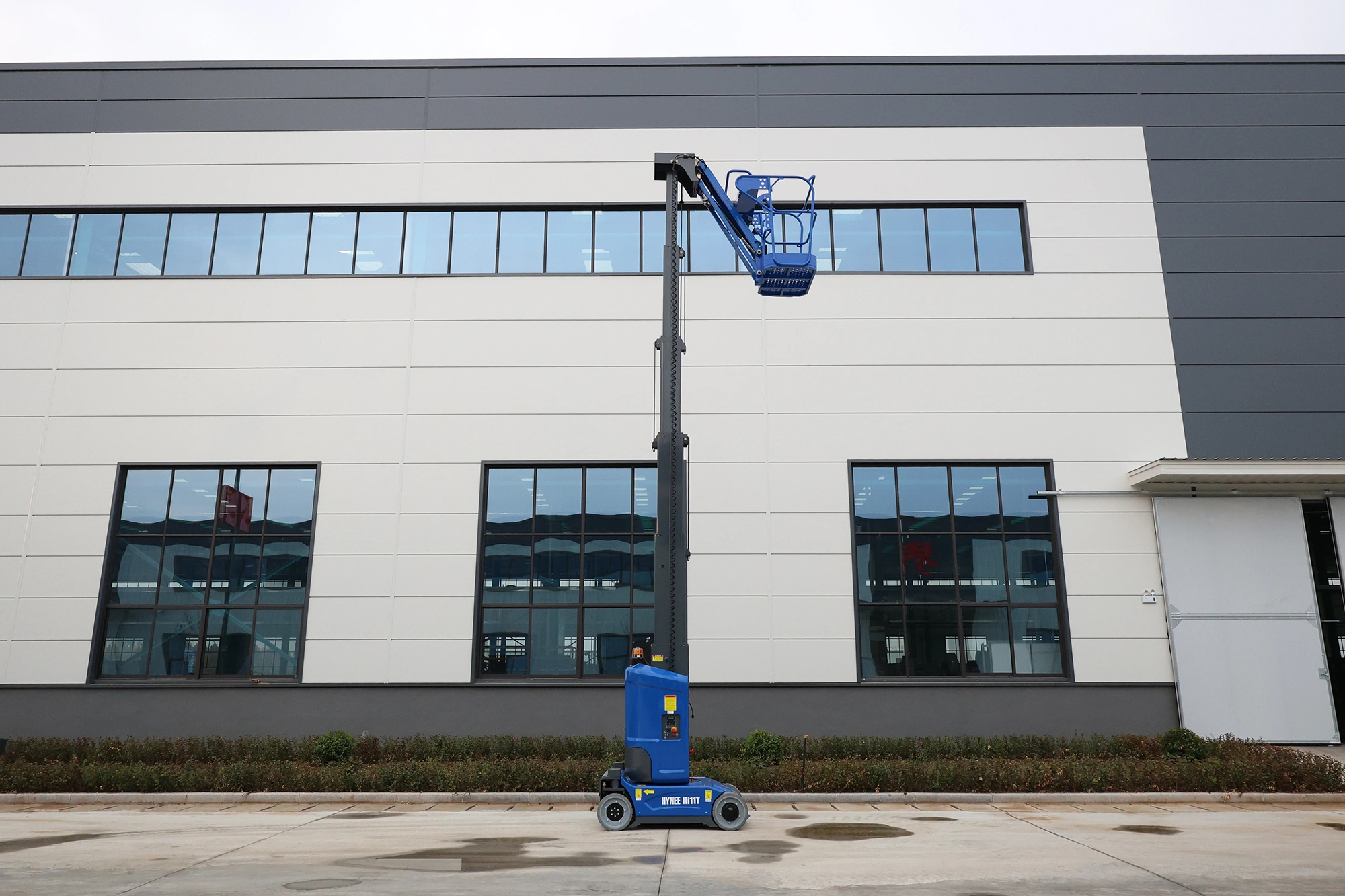
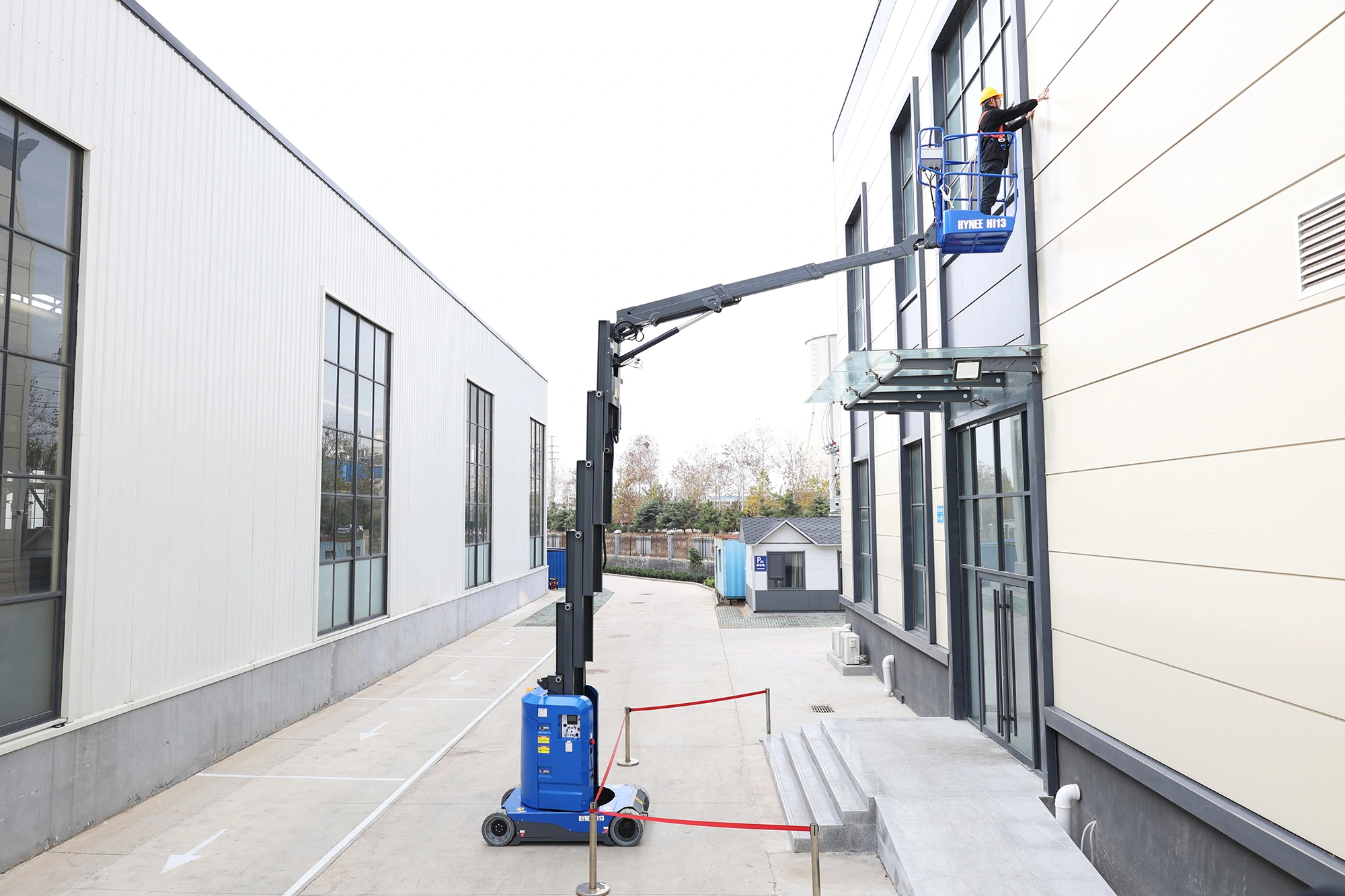
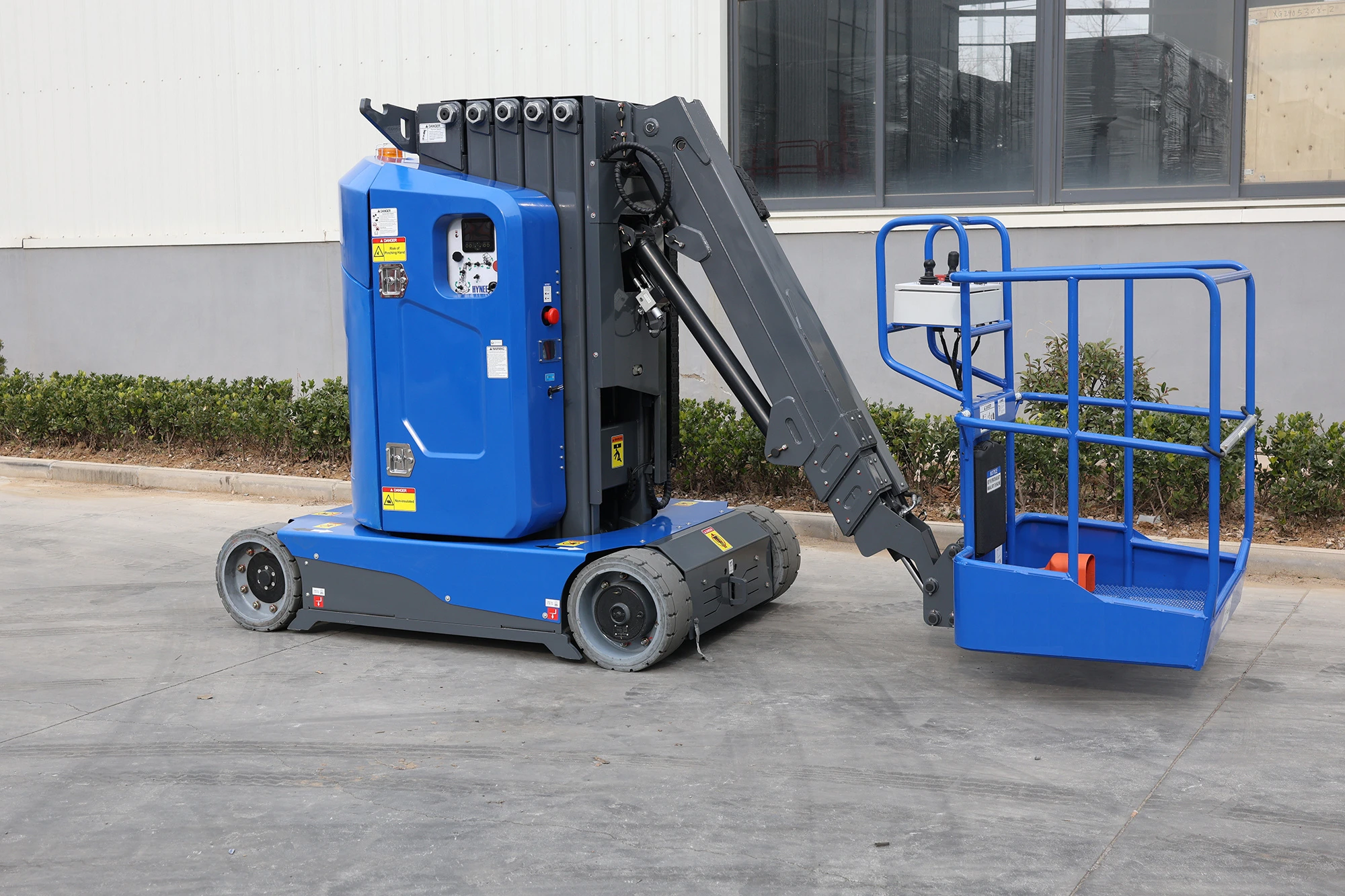
Differences between Tube Style Vertical Mast Lift and Forklift style Vertical Mast Boom Lift: Hi11T vs Hi13

In the field of aerial work platforms,also known as manlifts or personnel lifts ,no single machine fits all scenarios. Different working conditions, budgets, and usage frequencies demand different equipment. Hynee understands this well — we don't force a binary choice. Instead, we help you make an optimized selection based on your real needs.

Hi11T – Tube Style Mast Boom Lift: Launched in 2022, this classic mast boom lift has led the market with its proven tube style structure and outstanding cost-effectiveness.

Hi13 – Forklift Type Vertical Mast Boom Lift: Launched in 2025, this innovative vertical boom lift introduces a forklift-type heavy-duty mast, fully optimized for long-term, high-frequency aerial work.

These two mast boom lifts are not about "which is better" — they serve different missions. Below we compare them from four angles: market performance, structural differences, user experience, and application scenarios.

1. Market Status: Hi11T – The Classic Best-Seller, Hi13 – The Next-Generation Mast Boom Lift

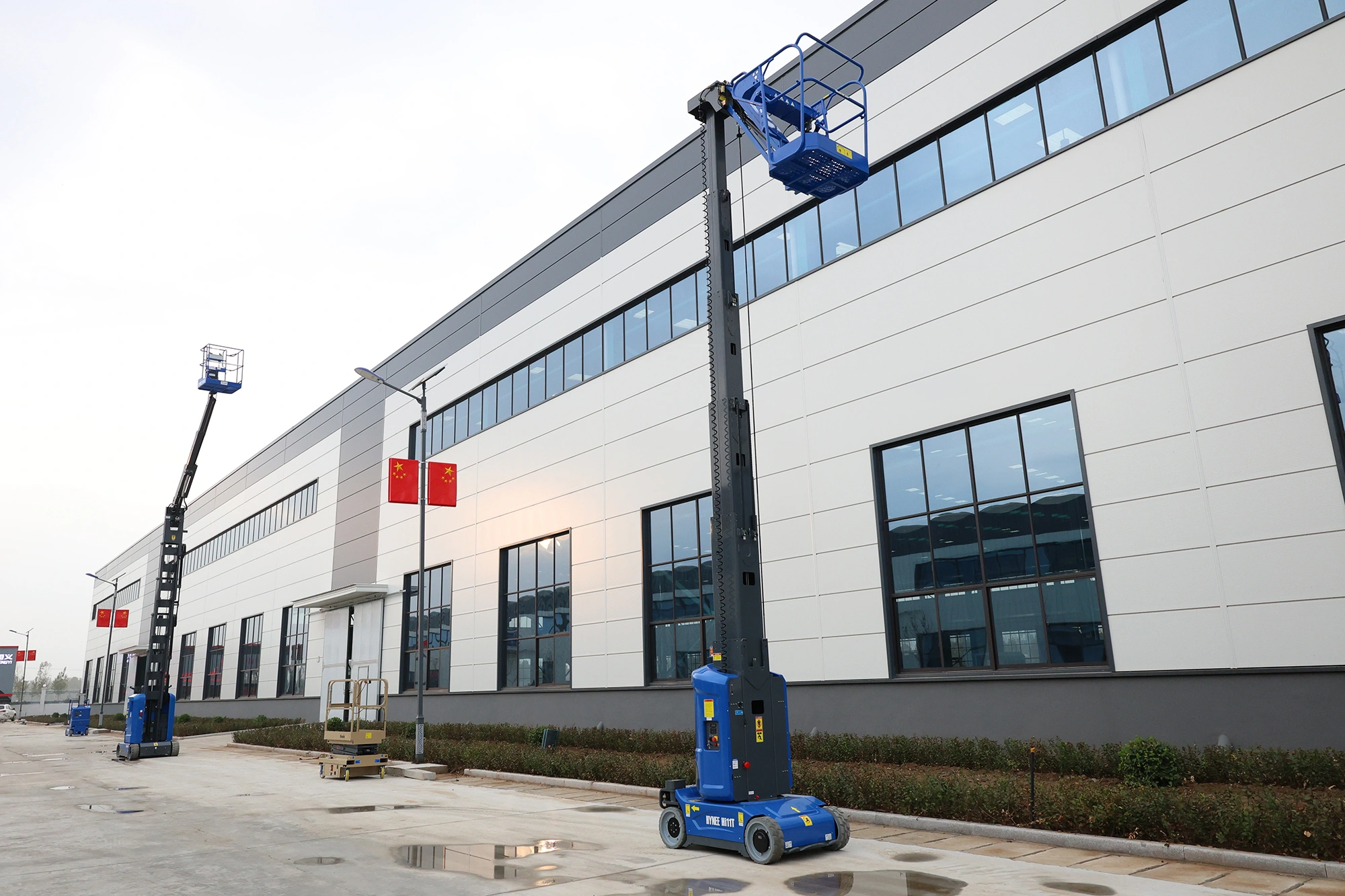
Hi11T: Consistently a top seller, this vertical mast boom lift is the choice of the majority. It handles plant maintenance, commercial facility operations, warehouse inventory, and equipment installation with ease.

HI11T full view

Hi13: A complete iteration designed for higher demands. Drawing on years of market feedback, Hynee developed this mast boom lift to deliver comprehensive upgrades in durability, maintainability, and working range — starting from the core mast structure.

HI13 full view

In a sentence: Hi11T is the practical, budget-friendly vertical mast boom lift; Hi13 is the future flagship – more durable, easier to use, and lower total cost of ownership.

2. Core Differences: From Structural Design to Real-World Experience on a Mast Boom Lift

The fundamental difference lies in the mast structure. Hi11T uses a classic tube style mast; Hi13 adopts a forklift type heavy-duty mast. This difference drives every aspect of daily use.

2.1 Hi11T – Tube Style Mast Boom Lift: Mature, Stable, Cost-Effective

●Exceptional stability: Four-directional constraints minimize platform sway – ideal for precision tasks like laser alignment.

●High structural rigidity and torsional resistance.

●Outstanding cost-effectiveness – best for budgetconscious buyers.

Note: Under long-term, high-frequency use, tube style mast lifts require more involved maintenance (e.g. chain inspection needs disassembly, slide blocks wear out). These are industry-wide characteristics, not flaws of the Hi11T. They inspired the Hi13's structural innovation.

2.2 Hi13 – Forklift Type Vertical Mast Boom Lift: A Maintenance Revolution

2.2.1 Maintenance Convenience: From "Disassemble to Inspect" to "Direct Visual Check"

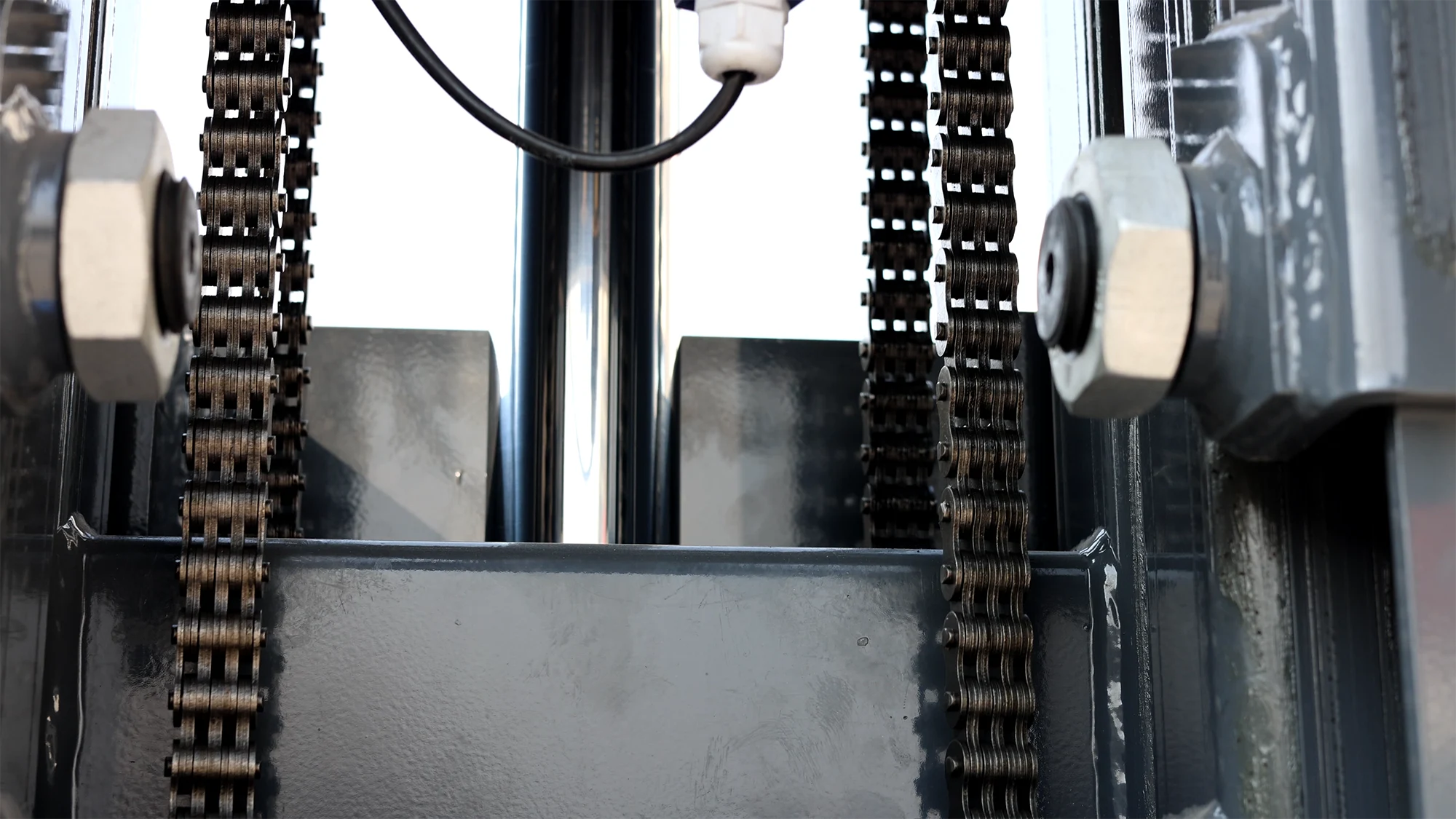
●Chain inspection: Fully exposed chains – tool-free, seconds-per-day checks.

Fully exposed chains

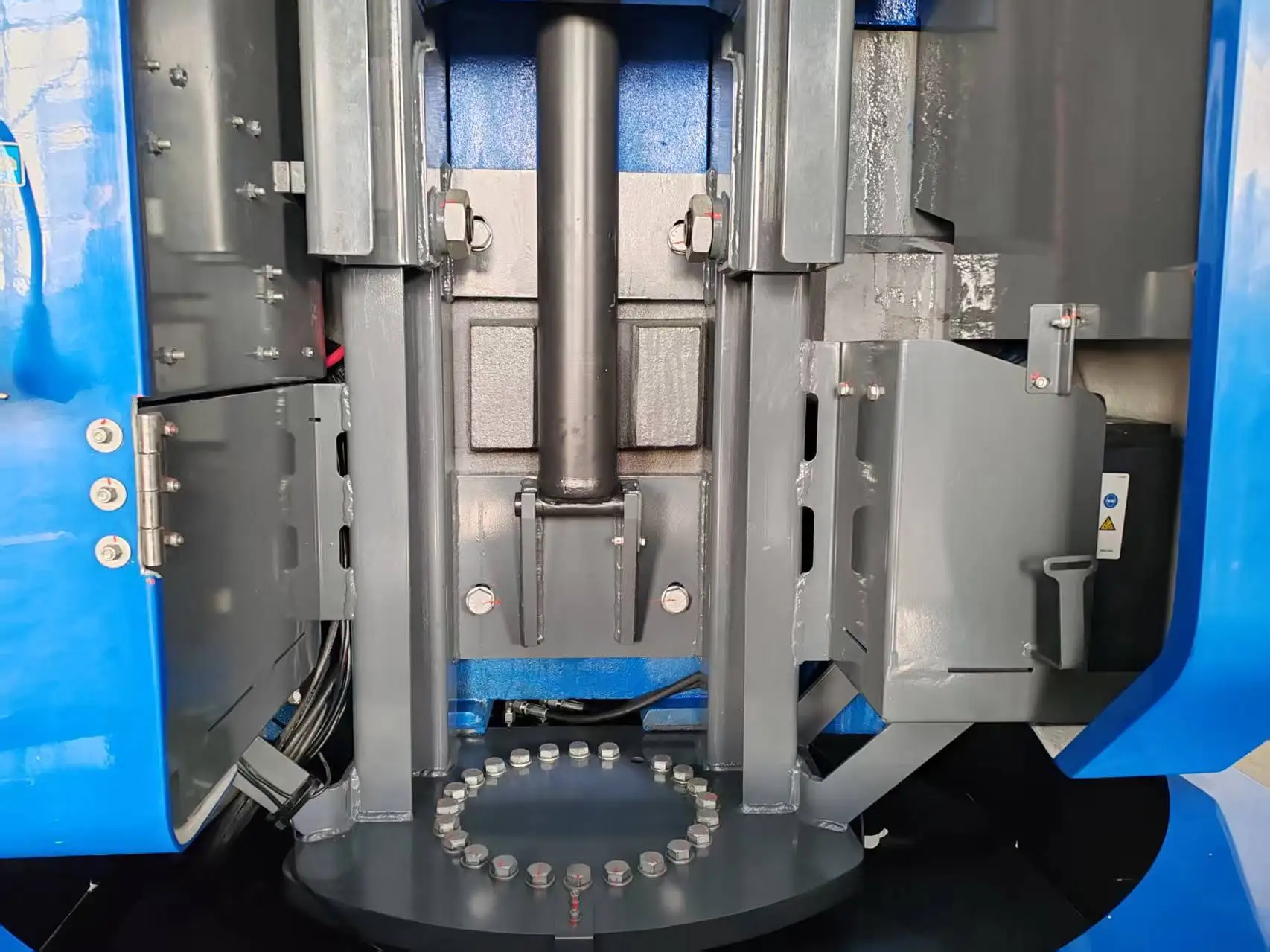
●Cylinder replacement: No mast disassembly – repair time reduced by >90%.

Cylinder

●Maintenance-free rollers vs. self-lubricating slide blocks – dozens of times longer life.

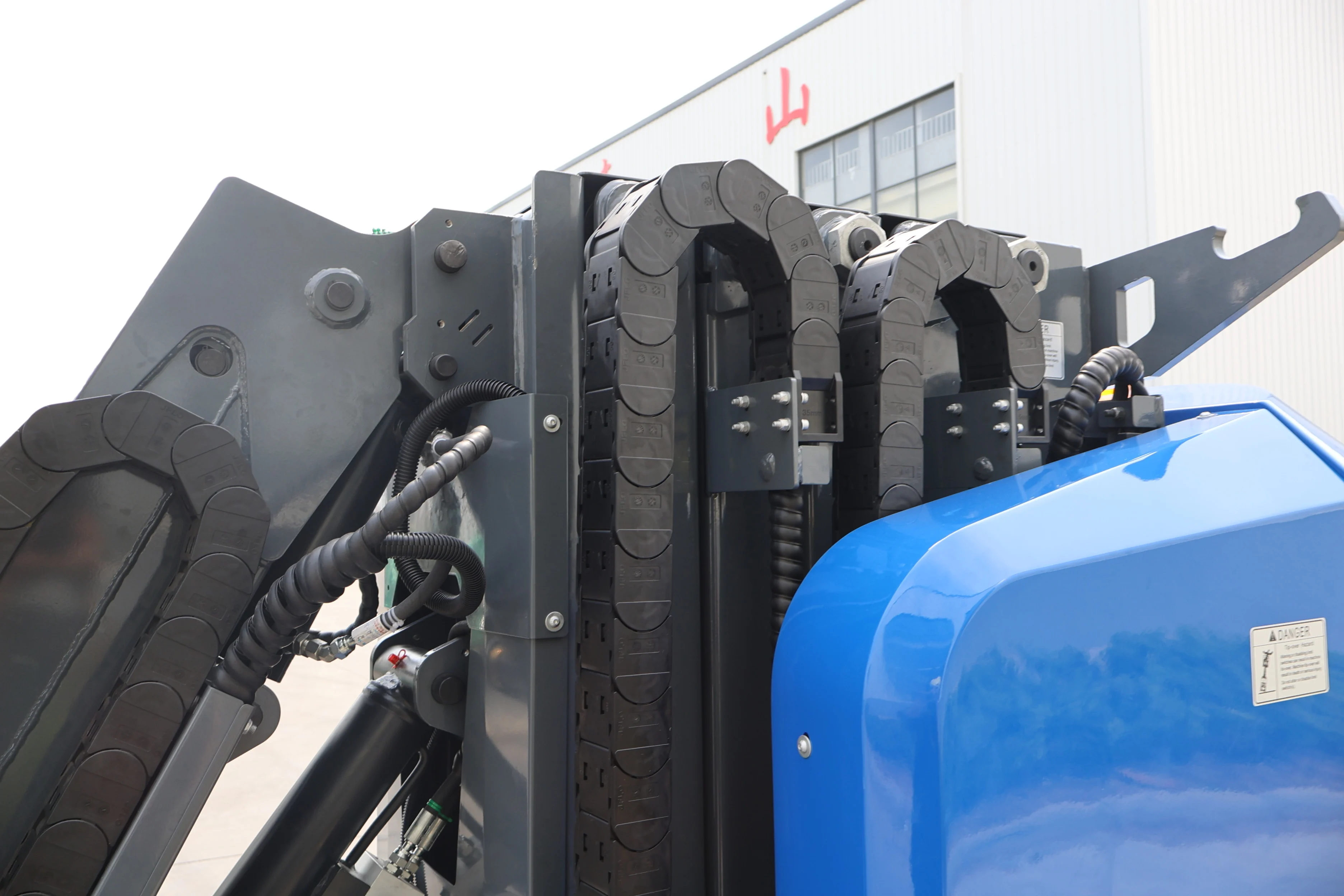
●Cable carrier (drag chain) replaces spring cables – nearly zero signal failures.

Cable carrier (drag chain)

Bottom line: Hi11T is "trouble-free during use, laborious when repair is needed"; Hi13 is "daily checks are simple, repairs rarely need disassembly".

2.2.2  Durability & Total Cost of Ownership for Your Mast Boom Lift

Roller life > slide block life by tens of times.

Signal cable failure rate reduced by >90%.

Higher initial cost of Hi13 is recovered within two years for highfrequency users.

2.2.3Active Safety – A Step Change Only Possible on This Vertical Mast Boom Lift

The Hi13's spacious mast interior allows chain tension sensors (standard). They monitor each chain set in real time and automatically cut lift motion if slack or overload is detected. Tube style mast lifts cannot accommodate this active safety feature.

2.2.4Horizontal Outreach Doubled – Cover More Area with One Mast Boom Lift

Hi13 reaches 6.05m horizontally (Hi11T: 3m). This lets the boom lift cross production lines, racking, and other obstacles without repositioning.

 3. Application Scenarios: Which Vertical Mast Boom Lift Fits You?

Choose Hi11T (tube style mast boom lift) when:

●Working height ≤11m, outreach ≤3m

●Low usage frequency, noncontinuous operation

●Budget is the top priority

●Ultra-low sway needed (precision work)

●Ideal for indoor manlift applications such as warehouse inventory, retail store maintenance, and facility checks in confined spaces.

 HI11T full view

Choose Hi13 (forklift type vertical mast boom lift) when:

aerial work platforms manufacturer ing height 11-13m or outreach >3m (up to 6.05m)

●High-frequency / continuous operation (rental fleets, heavy industrial plants)

●You want low total lifecycle costs

●Active safety (chain sensors) is required

●Obstacle crossing is common (warehouses, logistics centers, production lines)

●Also suitable for demanding indoor manlift tasks where outreach and durability matter.

HI13 full view

 4. Key Specifications – Mast Boom Lift Hi11T vs Hi13

Parameter

Hi11T (Tube Style Mast Boom Lift)

Hi13 (Forklift Type Vertical Mast Boom Lift)

Max working height

11.2 m

12.65 m

Max horizontal outreach

3 m

6.05 m

Overall width

1.0 m

1.2 m

Mast structure

Tube style

Forklift type heavy-duty mast

Chain inspection

Requires disassembly

Direct visual, no tools

Chain tension sensor

Not available

Standard

Mast moving components

Self-lubricating slide blocks

Heavy-duty rollers, maintenance-free

Signal cable type

Spring cable

Cable carrier (drag chain)

Cylinder replacement

Requires mast disassembly

No mast disassembly

Platform sway

Extremely low (4-way adjustable)

Low (forward/back not adjustable)

Total cost of ownership

Low initial, higher later

Higher initial, much lower later

5. Future Trends – A Complete Mast Boom Lift Product Matrix

Hi11T remains the value champion for basic tasks and budget‑sensitive users.

Hi13 together with the tracked mast lifts HI10, HI9C and wheeled mast boom lifts Hi10, Hi11T – becomes the mainstay for high‑intensity, high‑efficiency, long‑cycle aerial work. We don't deny the classics.

We build on them and go further. That's Hynee's pursuit of excellence – solving real user pain points with structural innovation.

For more details on the Hi13 series mast boom lift or a custom selection recommendation, contact the Hynee technical support team.

Top Bowling Equipment Producer For Professional Person Bowling Centers

Choosing the right bowling producer is one of the most earthshaking decisions when development or upgrading a professional bowling center on. The tone, dependableness, and public presentation of bowling equipment can directly mold the customer see, operational , sustentation costs, and long-term lucrativeness of a facility.

A professional bowling revolve about requires much more than bowling lanes. It needs TRUE pinsetting systems, long-wearing lane surfaces, automatic rifle grading applied science, bowling balls, pins, ball returns, seats, approaches, gutters, and other requirement components. Working with an skilled bowling manufacturer can help readiness owners produce a modern font and rock-steady bowling environment.

Why Bowling Equipment Quality Matters

Bowling centers see heavy daily use. Equipment may run unceasingly for several hours, particularly during weekends, holidays, tournaments, and other busy periods. Low-quality can result in shop breakdowns, magnified upkee requirements, and interruptions for customers.

A esteemed bowling equipment producer focuses on durability and homogenous public presentation. High-quality components are designed to handle perennial use while maintaining TRUE operation. This can help bowling revolve around owners tighten unexpected and cater customers with a better overall see.

Quality equipment can also contribute to refuge. Properly manufactured lane components, ball returns, seating area systems, and physics equipment are studied with work refuge in mind.

Complete Equipment Solutions

A leadership bowling manufacturer may cater a wide range of products and systems for professional facilities. Having get at to triune categories from one manufacturer can simplify the provision and installation work.

A complete solution allows bowling focus on owners to organise different systems more effectively. Compatibility between components is particularly world-shaking when installment automatic engineering and natural philosophy equipment.

Modern Bowling Lane Technology

Bowling lanes are among the most significant parts of a bowling revolve about. Modern lane systems are premeditated to supply homogenous performin conditions while support long-term commercial message use.

Manufacturers may volunteer different lane materials and construction options depending on the facility’s requirements. Synthetic lanes, for example, are wide used in commercial bowling centers because they can ply homogenous public presentation and may require less sustentation than traditional materials.

A professional person manufacturer can help customers take lane solutions supported on factors such as expected usage, available space, maintenance requirements, and budget.

Advanced Pinsetter Systems

Pinsetters play an essential role in automated bowling centers. After each thrust, the system must with efficiency clear fallen pins, reset the appropriate pins, and prepare the lane for the next roll.

Modern pinsetter technology can improve work efficiency and tighten the number of manual work requisite from staff. Reliable natural philosophy systems are particularly worthy for busy bowling centers where lanes may be operating unendingly.

When selecting a producer, readiness owners should consider equipment reliability, alternate parts, technical support, and sustainment requirements.

Automatic Scoring Systems

Technology has transformed the bowling experience. Automatic scoring systems allow players to see heaps, frames, statistics, and other selective information without manual of arms calculations.

Modern scoring systems may also integrate with customer-facing displays and bowling revolve around direction software package. This can produce a more attractive undergo while serving staff finagle lane operations.

A bowling equipment producer with undergo in integer applied science can cater solutions that unite marking, lane direction, and customer entertainment.

Custom Bowling Center Solutions

Every bowling facility has different requirements. A small entertainment center on may need a different synthetic bowling lane manufacturer contour from a big professional bowling venue.

Customization can need lane layouts, grading systems, seating arrangements, lighting, stigmatisation, and other features. Experienced manufacturers can work with readiness owners, architects, and contractors to train equipment solutions that fit the available space and byplay objectives.

Custom solutions can be especially useful for new bowling centers, amusement complexes, hotels, resorts, and facilities undergoing refurbishment.

Importance of Manufacturer Experience

Experience is an earthshaking factor when selecting a bowling equipment producer. An established producer may empathize the virtual challenges associated with bowling revolve around twist, installation, surgery, and upkee.

Facility owners should evaluate the manufacturer’s production tone, technical foul knowledge, warranty policies, replacement parts handiness, instalmen support, and after-sales service.

A manufacturer that provides long-term subscribe can be more valuable than a provider that plainly delivers equipment and leaves the client to finagle installation and sustainment independently.

Energy Efficiency and Maintenance

Modern bowling centers are also becoming more convergent on operating and efficiency. Equipment designed with effective components can potentially help businesses wangle electricity consumption and sustentation expenses.

Easy access to replacement parts and univocal upkee procedures can further tighten . Preventive sustainment is another momentous factor out because identifying worn components before they fail can help bowling centers avoid unplanned interruptions.

Choosing the Right Bowling Equipment Manufacturer

Before selecting a manufacturer, bowling revolve about owners should compare several portentous factors. Product timbre, industry go through, customization capabilities, technical support, warranties, and overall value should all be considered.

It is also useful to sympathise the producer’s installment process and ongoing serve options. A supplier that offers comprehensive support can make the work on of building or upgrading a bowling concentrate on significantly easier.

Conclusion

A TRUE bowling manufacturer plays an fundamental role in the succeeder of a professional person bowling revolve around. From durable lanes and steady-going pinsetter systems to Bodoni font scoring engineering and custom-made facility solutions, the right can meliorate both operational public presentation and client satisfaction.

When choosing a producer, businesses should look beyond the initial buy up terms. Long-term reliability, maintenance requirements, technical foul subscribe, alternate parts, and compatibility are equally world-shaking.

By partnering with an experienced bowling manufacturer, professional person bowling centers can build facilities that homogenous public presentation, pleasurable experiences, and long-term value for both operators and customers.